
Recording now · Florence · Muscle Shoals · Sheffield · Tuscumbia
Someone is logging every car that drives through the Shoals.
Flock Safety cameras read and store your license plate as you pass, recording where you were and when. We're here to make sure people in the Shoals know it's happening, and to organize to get these cameras removed.
Start here
Learn what's watching you
A few things worth understanding. Lots of information in each tab.
What is a Flock camera? The hardware, and what it actually records
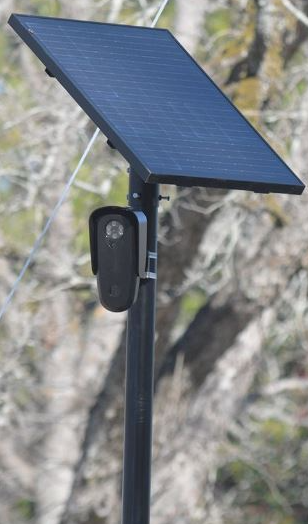
Flock Safety sells automated license plate readers (ALPRs), which are solar powered cameras usually mounted on a small pole near a road. As you drive past, the camera photographs your car, reads your plate, and records the time and location. It builds a searchable history of where vehicles have been.
Police departments buy access to this data, often on annual contracts. Many networks are also shared between agencies, so a plate captured here can be searched by departments far outside the Shoals. Most people have no idea the cameras are there or that their movements are being logged.
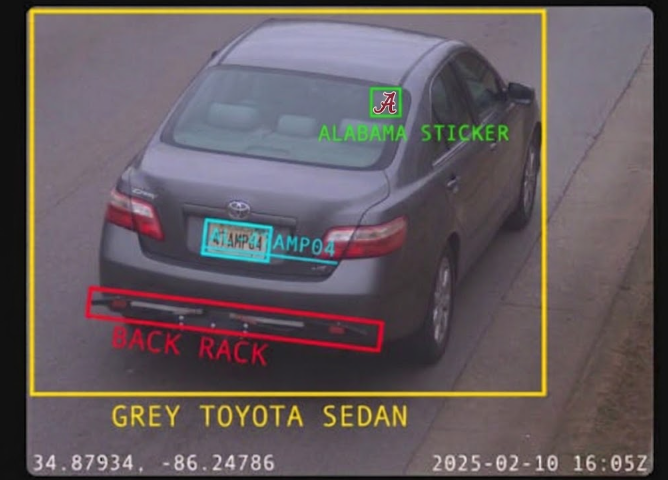
These aren't simple traffic cameras. Flock markets its system as AI powered, and it does more than read plates. Its "Vehicle Fingerprint" technology uses machine learning to catalog a car's make, color, body type, dents, roof racks, bumper stickers, and other features, so police can search for a vehicle even without a plate number. Flock's newer Condor cameras can automatically pan, tilt, and zoom to detect and follow people. Flock says its plate readers don't use facial recognition and don't identify individuals, a distinction critics argue is thin once a camera is zooming in on faces.
Sources: BGR , Wikipedia , and Flock's own policy pages .
Why it matters The warrant loophole, explained plainly
Privacy is a prerequisite for freedom. These cameras strip it away.
Flock cameras are a kind of surveillance we don't have a good name for yet: private surveillance, run for the government. A company most people have never heard of gets to record every time you drive to the grocery store, the doctor, your church, a protest, or anywhere else, and keep that record.
Here's why that matters. The police aren't allowed to follow you around town, log everywhere you go, and keep a permanent record of it. If they suspect you of a crime, they have to bring evidence to a judge and get permission first. That check of a judge, probable cause, and a warrant is what stands between ordinary life and unreasonable search and seizure.
Flock is the loophole. Because Flock is a private company, it isn't bound by those rules. It can track everyone, all the time, no suspicion required. But Flock works hand in hand with the police. So instead of asking a judge for permission, an officer can simply ask Flock where your car has been for the past month. The warrant requirement doesn't get satisfied. It just gets skipped.
That's the real problem: surveillance the government could never legally run itself, bought off the shelf from a company that can.
What the law actually says Fifty years of the Fourth Amendment catching up to technology
To understand why these cameras are such a problem, it helps to know what the Fourth Amendment is actually for. Its whole purpose, its spirit, is simple: the government shouldn't get to rummage through your private life without a good reason and a judge's sign-off. The Founders had just lived through British officers searching homes and papers whenever they pleased, and they wanted that to never happen here again. So the deal built into the Constitution is that if the government wants to search you, it has to show a judge probable cause and get a warrant first. That check is the whole point.
The trouble is that the Fourth Amendment was written in 1791, and technology keeps inventing new ways to watch people that the Founders never imagined. So for the last fifty years, there's been a running back-and-forth: technology opens a new way to spy, the government uses it without a warrant, and eventually the Supreme Court has to decide whether the old rules still apply. Here's how that fight has gone, because it lands directly on Flock.
The government keeps finding the loophole. The Court keeps closing it. Flock is the newest loophole.
1979: the loophole gets created. In two cases, Smith v. Maryland and United States v. Miller, the Court came up with what's called the "third-party doctrine." The idea was that if you voluntarily hand information to somebody else, like the phone numbers you dial or your bank records, you've given up your privacy in it, so the government can get it without a warrant. In 1979 that seemed small. You were handing over a list of phone numbers, not your life.
But that doctrine became the government's favorite loophole. As more and more of modern life started running through third parties, the government's argument grew: your emails, your web history, your location, all of it is "voluntarily" handed to some company, so under the third-party doctrine, none of it needs a warrant. A rule built for a list of dialed numbers was being stretched to cover a person's entire digital life.
2012: the Court gets nervous. In United States v. Jones, police stuck a GPS tracker on a suspect's Jeep and followed him for 28 days without a valid warrant. The Court ruled that was a search. What matters most is what five justices said alongside the ruling: that tracking someone's every movement for weeks is fundamentally different from following them down one public street, and the old rules might not be built for it. It was a warning shot that the third-party doctrine couldn't just keep expanding forever.
2018: the Court draws a real line. This is the big one before now. In Carpenter v. United States, the government pulled 127 days of a man's cell phone location history from his carrier, without a warrant, arguing the third-party doctrine covered it because the data belonged to the phone company. The Court said no. It ruled that your location history over time is so revealing, it paints such a complete picture of your life, that you keep a Fourth Amendment privacy interest in it even though a company is holding it. The Court said the fact that a third party has the data "does not by itself overcome" your right to privacy. For the first time, the loophole had a real limit.
2026: the Court goes further. This year, in Chatrie v. United States, the Court took on "geofence" searches, where police grab data on everyone who was in a certain area at a certain time. It ruled those are searches requiring a warrant, and it pushed the third-party doctrine back even harder. The through-line from 2018 to now is unmistakable: when a technology lets the government reconstruct where you've been and what you've done, the fact that a company holds the data no longer lets them skip the warrant.
Now put Flock in that timeline. A private company holds a detailed, searchable history of everywhere your car has been. Police tap into it without a warrant, using the exact same "a third party has it, so we don't need permission" argument the Supreme Court has been chipping away at since 2012 and rejecting outright since 2018. Flock didn't invent a new idea. It's the same old loophole in a new box. Chatrie didn't rule on Flock by name, so this isn't settled. But every time the Court has faced this basic move, it has come down on the side of the warrant, and the reasoning points straight at license plate tracking. That's why we think warrantless plate readers are living on borrowed time, and why the spirit of the Fourth Amendment, the reason it exists at all, is squarely on our side.
Sources: United States v. Jones (2012) ; Carpenter v. United States (2018) ; background on the third-party doctrine and Smith v. Maryland (1979) ; and Chatrie v. United States (2026) .
Your tax dollars pay for it Who's buying these, and with whose money
Flock cameras aren't free. Local police departments buy them on contracts that can run tens of thousands of dollars a year, paid out of city budgets, which means paid by you. Residents are funding a system that surveils those same residents, often without ever having been asked in a public vote.
Flock says it doesn't sell your data, and that customers own it. Take them at their word. The record still shows the safeguards failing in practice.
So the honest answer to "how do we know the promises are true?" is: we don't, and several cities have learned the hard way that they weren't. Once the cameras are up and the data exists, control over who sees it has proven very hard to guarantee, and impossible to take back after the fact. The only reliable way to keep your movements from being searched is for the data not to be collected in the first place.
It's already storing more than plates What one researcher found in the data
Flock likes to say these are just license plate readers. But independent security researcher Benn Jordan dug into how the system actually handles the images it captures, and found something that doesn't match that story.
According to his investigation, the cameras don't only photograph plates. They capture images of all kinds of things that aren't vehicles at all, and rather than deleting those non-vehicle images, the system sorts them off into a separate folder and keeps them. Think about that. If the whole purpose is reading license plates, there's no reason to be holding onto photos of everything and everyone else the camera happens to see. But it is.
That's the thing about "it only does X." Once the hardware is out there capturing everything in view, what it does with those images is a policy choice, and policies change. The camera is already seeing far more than a plate. Whether that extra gets used, and how, is up to whoever controls the system, not you.
See Benn Jordan's work, linked in our videos and resources section below.
Cameras today, more tomorrow Drones now, and the radios already built into the cameras
License plate readers are only the start, and this is the part we most want people to think about, because it's the reason to act now instead of later.
Flock has already moved into drones. It acquired a "Drone as First Responder" company and is rolling out programs that let police launch aircraft to a location and follow vehicles from the air. The company has said it aims to expand these drone programs to around 100 cities. A camera on a pole records the cars that pass one fixed spot. A drone can follow you, leaving your driveway, across town, watching where you stop.
And here's the part most people don't know. When independent researchers physically took apart Flock cameras to see what's inside, they found the devices don't just have a cellular connection. They also contain Bluetooth and WiFi radios. The technology that would let one of these cameras detect the wireless devices around it, your phone, your smartwatch, your earbuds, your car's own Bluetooth, is already physically built into the hardware on the pole.
That's why the time to draw the line is before the network is finished being built, not after. It is far easier to keep new surveillance out than to peel it back once the poles are up, the contracts are signed, and the budgets depend on it.
Sources: teardown documenting the cameras' Bluetooth/WiFi radios and chipsets by Ryan O'Horo ; background on how passive wireless and Bluetooth tracking works via the EFF's Street-Level Surveillance project .
The record
This isn't hypothetical
Documented cases of these systems being abused, and cameras turning up where they shouldn't be.
Police have used these systems to stalk people At least 18 documented cases nationwide
The promise is that only authorized officers search the data, for real investigations. In practice, officers have repeatedly used Flock to track romantic partners, exes, and even total strangers. This isn't a rare glitch. It's a documented, recurring pattern, and most cases only came to light because the victim reported being stalked, not because internal safeguards caught it.
In April 2026, the Institute for Justice, a civil liberties law firm, identified at least 18 cases nationwide of officers allegedly using ALPR systems to stalk someone they were interested in, with most occurring since 2024. A separate tracker, the ALPR Abuse Library, has catalogued around 20 stalking or targeting cases. Investigators consistently describe these tallies as a floor, not a ceiling.
The point isn't that every officer is a stalker. It's that once this database exists, a single person with a login can track anyone's movements as easily as a Google search, and the safeguards have repeatedly failed to stop it in advance.
The system is wrong a lot, and people pay for it False positives, wrongful stops, and guns drawn on the innocent
Set aside deliberate abuse for a second. Even when everyone's acting in good faith, these systems are wrong constantly, and the mistakes land on innocent people.
When Roseville, California's police department analyzed the alerts these cameras sent flagging stolen or felony vehicles, it found the plate had been read wrong in 71% of them. A separate LAPD Inspector General audit found nearly a third of the stolen-vehicle alerts it reviewed were false, and LAPD let its Flock contract expire afterward. These aren't paperwork errors. When a computer misreads a plate and flags a car as suspicious, an officer can walk up treating an innocent person as a criminal.
Flock is now adding tools to "flag unusual activity." But a flag doesn't fix a system whose alerts are wrong this often, and it doesn't un-draw a gun. The only real accountability is a fully public audit trail, so the community can see how this technology is actually being used, and how often it's wrong.
Sources: reporting by Business Insider on the Roseville Police Department's analysis of 1,427 alerts; the Institute for Justice ALPR wrongful-stop catalog; and the LAPD Inspector General audit. Note: the 71% figure is the share of alerts that contained a misread, not the share of all plate scans.
Cameras are showing up in unsettling places Playgrounds, schools, and exposed live feeds
Flock cameras are marketed as license plate readers for roads. But residents and journalists have documented them installed facing places that have nothing to do with traffic, including a children's playground, which went viral in June 2026 and prompted widespread questions about the real purpose of the placement.
The concern got sharper in late 2025, when a security researcher found that Flock had left at least 60 of its AI powered cameras exposed on the open internet, including a live feed showing unattended children at a playground. Anyone online could watch, and, using the footage, potentially identify people. Flock called it a limited misconfiguration that had since been fixed.
- Playground controversy: Daily Dot
- Exposed camera feeds: 404 Media / Yahoo News
- Cameras aimed at schools and sidewalks: WUFT
Dig deeper
Videos, links, and documentation
Don't take our word for any of this. Watch it, read it, and check the sources yourself.
Videos on the topic Investigations and explainers on license plate surveillance
Reporting and investigations Journalism documenting how these systems get used
- Cops keep getting arrested for using Flock to stalk people 404 Media
- Police have used plate readers to stalk romantic interests Institute for Justice
- How police use Flock's network to surveil protesters and activists Electronic Frontier Foundation
- What the Flock: police surveillance is ripe for abuse ACLU of Wisconsin
- A teardown of Flock's cameras (the Bluetooth/WiFi radios inside) Ryan O'Horo
- Syracuse police exposed driver data to thousands of officers nationwide Central Current
- What Flock cameras actually scan and store BGR
Research on whether they work The academic studies on ALPRs and crime
We pulled together what the peer-reviewed research actually says about whether these cameras reduce crime. The short version: the evidence is thin and mixed, and the best studies show they help investigate crimes without preventing them. See our full breakdown here →
- Automated License Plate Readers, Vehicle Theft, and Clearance CrimRxiv working paper reviewing the causal evidence
- An Evaluation of a Major ALPR Expansion (Atlantic City) 2025 impact evaluation
- Measuring the Cost-Effectiveness of ALPR Cambridge Journal of Evidence-Based Policing
- A Multi-Site Evaluation of ALPRs Policing Institute
Lawsuits and legal rulings Where the courts have landed so far
- Chatrie v. United States (Supreme Court, geofence + third-party doctrine) The 2026 ruling
- Carpenter v. United States (Supreme Court, cell phone location data) The 2018 ruling that limited the third-party doctrine
- United States v. Jones (Supreme Court, GPS tracking) The 2012 GPS tracking ruling
- Lawsuit challenges San Jose's warrantless ALPR mass surveillance Electronic Frontier Foundation
- Washington court rules Flock camera data are public records Electronic Frontier Foundation
- What police audit logs reveal about how this data gets searched ACLU
Organizations working on this Groups tracking surveillance and defending civil liberties
- DeFlock The nationwide ALPR mapping project that inspired this site
- Electronic Frontier Foundation: ALPRs Legal and technical analysis of plate reader systems
- Institute for Justice Civil liberties law firm tracking ALPR abuse cases
- ACLU Civil liberties litigation and reporting on surveillance
- Atlas of Surveillance Database of surveillance technology used by US law enforcement
Documentation and public records The contracts and what our governments signed
We've started publishing the actual signed contracts and approved resolutions from Shoals governments: what they bought, when, and for how much. Primary documents are the strongest thing you can bring to a public comment period, because nobody can argue with a government's own signed paperwork.
See The Receipts → for the documents we have so far, with links to every original government source. We're adding more as we obtain them.
The map
Find the cameras near you
DeFlock maintains a nationwide, community reported map of license plate readers built on OpenStreetMap. It's the best public record of where these cameras are, including here in the Shoals.
Open the DeFlock map
Zoomed to the Shoals. Every marker is a community reported license plate reader.
View the live map →Map data from deflock.org , built on OpenStreetMap. Camera locations are community reported and may be incomplete. Spotted a camera that isn't listed? You can add it yourself, see Take action below.
Check your plate
Have I Been Flocked?
"Have I Been Flocked" is an independent tool that compiles Flock search records released through public records requests. You type in your license plate and it tells you whether an operator on the Flock system has looked your plate up. One important thing to understand: a result means someone searched your plate, not that a camera simply photographed you driving by.
Check your license plate
Opens haveibeenflocked.com in a new tab so you can search your plate against the Flock records that have been made public.
Open Have I Been Flocked →Tool built and maintained independently at haveibeenflocked.com . Its data comes from public records requests and may be incomplete or unavailable for some agencies, including here in the Shoals. Helping us obtain our local audit logs is part of how those records get added, see Take action below.
Take action
How we get them removed
Flock cameras are approved by local officials, which means local people can get them un-approved. Here's the path.
Add your name. Make the opposition visible.
Tell city and county officials across the Shoals to stop using Flock cameras, refuse new contracts, and end warrantless license plate surveillance.
Find out who approved them
File a public records request with the Florence, Muscle Shoals, Sheffield, and Tuscumbia police departments asking for their Flock Safety contract, data retention policy, and audit logs. We're already filing these across the Shoals, but you don't have to wait on us. Any Alabama resident can file their own, and the more requests that come in, the harder these are to ignore. It's easier than you'd think.
Show up and speak up
City councils vote on these contracts and their budgets, and public comment periods are where residents get heard. Showing up to council meetings matters. So does contacting your local city government offices directly. Call them, email them, and don't back down.
Bring your neighbors
One person is an outlier. Twenty is a constituency. Share what you've learned, collect signatures, and make the surveillance visible to people who'll vote.
Just talk about it
This is the easiest thing on the list and it might be the most important. Most people have no idea these cameras exist. Share our site or Facebook group link. Bring it up with friends, family, and coworkers. Post about it online and comment about it under posts where it's relevant. The more people who hear what's going on, the harder this is to keep quiet. DeFlock also sells signs, stickers, and shirts at deflock.org/store , which is an easy way to start the conversation without saying a word. Spread the word and join the community.
Join the Facebook group
This is where we organize. Camera sightings, what's coming up, and neighbors figuring this out together. It costs you nothing to join and it's the fastest way to plug into what's already happening in the Shoals. Come introduce yourself and don't back down.
Join the movement
You're not the only one who's uneasy about this
The cameras count on people not paying attention. The fastest way to change that is community. Pick whatever fits.
Join the Facebook group
Our main hub for discussion, camera sightings, and organizing. Join the group, post, and share it with other groups and people you know.
Join the groupGet in touch
Questions, a camera sighting, or want to help out? Send us a message and we'll get back to you.
Spread the word
Signs, stickers, and shirts from DeFlock's store are an easy way to start conversations in the Shoals.
Visit the store